
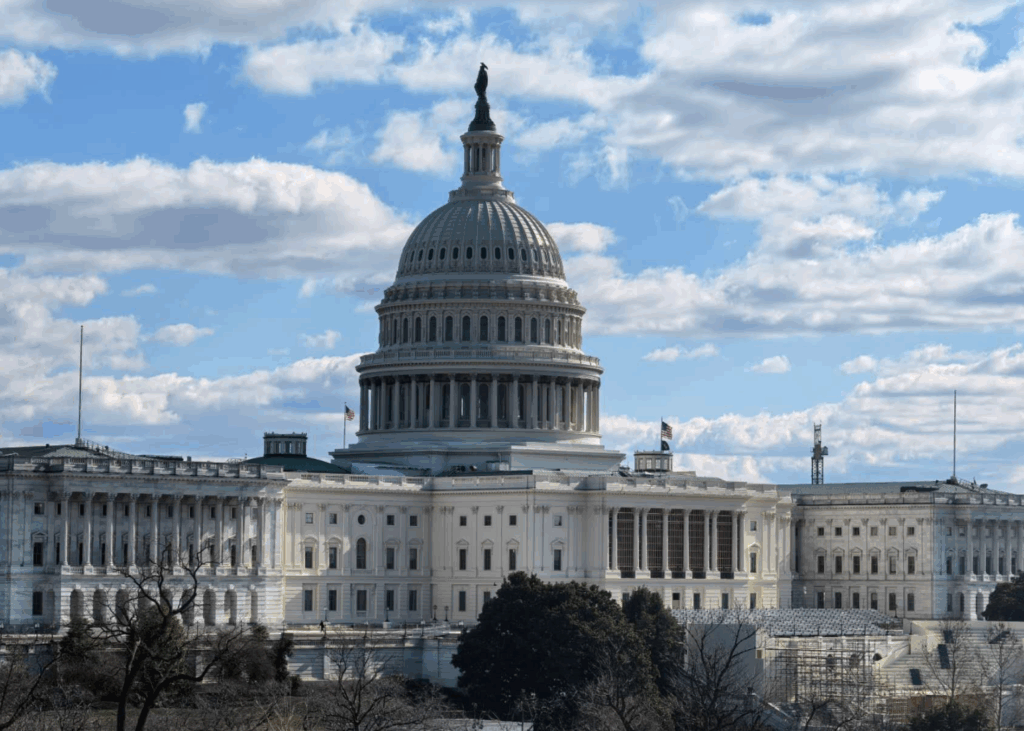
The U.S. government entered a partial shutdown at 12:00 a.m. on the 14th, limited to the U.S. Department of Homeland Security, after lawmakers failed to resolve a dispute over new restrictions on federal immigration enforcement officers.
The standoff follows a fatal shooting in Minneapolis in which federal immigration officers killed two U.S. citizens, an incident that ignited calls from congressional Democrats for stricter oversight of enforcement agencies.
Democrats are seeking new accountability measures for U.S. Immigration and Customs Enforcement and U.S. Customs and Border Protection, including requiring officers to wear body cameras, prohibiting face coverings that conceal their identities and mandating judicial warrants before entering private homes.
The shutdown affects roughly 13% of the federal civilian workforce, including the Transportation Security Administration, the Federal Emergency Management Agency and the United States Coast Guard. However, ICE and CBP operations will continue during the lapse in funding.
Many Republicans have said they are open to discussing certain changes but oppose requiring immigration officers to publicly identify themselves, arguing it could expose them to harassment or attacks. President Donald Trump said Friday that talks are ongoing but stressed the need to protect law enforcement, accusing Democrats of acting “crazy.”
The New York Times reported that lawmakers left Washington on Thursday with little sense of urgency ahead of the shutdown deadline, reflecting what both parties acknowledge is a lack of a clear path to resolving differences over whether to limit enforcement authority in legislation funding Homeland Security.
According to Politico, current negotiations suggest the shutdown could last at least 10 days. Republican Sen. John Kennedy of Louisiana said Thursday the “tit-for-tat” could continue for some time, adding he is not certain any eventual deal would pass. Democrats are wary of backlash for funding ICE, while Republicans face criticism from their base if they are seen as weakening the agency.
Congress has begun a weeklong recess, and analysts say the earliest possible resolution may come Feb. 24, the day Trump is scheduled to deliver his first State of the Union address of his second term. Some administration officials and Republicans privately worry a prolonged shutdown could overshadow the speech, which the White House had hoped would refocus attention on Republican economic priorities ahead of the midterm elections.
Republicans acknowledge the optics could be challenging if a key federal department remains shuttered while Trump declares the nation strong. A White House official said there are no plans to delay the address, and Speaker Mike Johnson is not expected to postpone the formal invitation absent a request from the White House.
The administration had sought to use the prime-time speech to shift attention away from recent controversies, including the Minnesota shooting involving federal immigration officers and the release of files related to disgraced financier Jeffrey Epstein.